
Receipts attached 2 sources
Sources
Limits
Exhibition dates and descriptions come from the institutional account reproduced on Yuko Mohri’s official site. This is not an independent review or confirmation of daily access. The first U.S. museum solo characterization is the museum’s claim. The Bass page could not be retrieved directly.
Corrections
No correction notes have been added for this article.
Fruit, used objects and ocean recordings supply the changing material of a three-gallery exhibition. The museum describes it as the Tokyo-based artist’s first solo show in a U.S. museum.
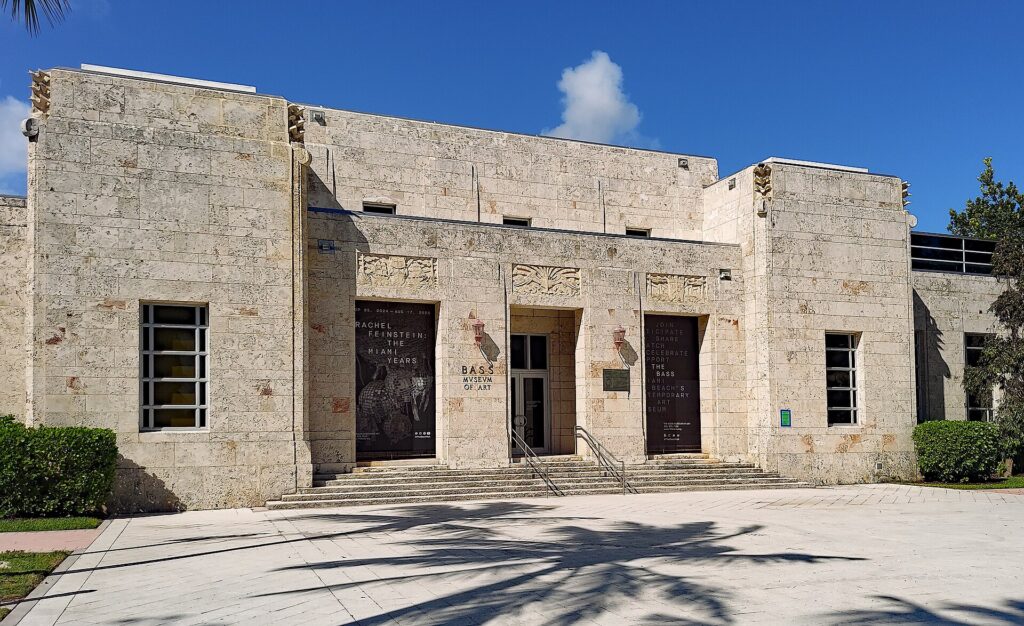
Yuko Mohri at The Bass is listed for September 17, 2026 through May 30, 2027 with an exhibition that gives Miami’s discarded objects and decaying fruit a role in making sound. The Miami Beach museum calls the show “Unviolated Imperfection.”
The useful distinction is between a display of completed objects and a set of working arrangements. In the museum’s account, moisture changes inside fruit become electronic signals, water circulates through improvised assemblies, and recorded ocean conditions become notes on a piano. The exhibition is organized across three galleries, each with a different way of allowing an outside force to alter the work.
This is an advance-to-visit account of the museum’s description, not a review based on attendance. The Bass calls it Mohri’s first solo exhibition in a U.S. museum, a characterization also carried in the artist’s official exhibition record. Neither claim implies that she has not exhibited in the United States before.
Yuko Mohri at The Bass: fruit that will not stay still
In “Decomposition,” the museum says fruit commonly grown in South Florida is fitted with electrodes. As the fruit deteriorates, changes in moisture generate electrical signals that are translated into pitches and light intensity. What looks motionless becomes an input to something audible and visible.
The distinction matters when reading the exhibition’s promise. The fruit does not play an instrument in the ordinary sense, and the museum is not presenting an agricultural experiment. Sensors and electronic translation sit between organic change and the sound a visitor hears. The installation makes that changing relationship its material.
The museum connects the work both to Western still-life painting and to Japanese Buddhist images of decomposition known as kusōzu. Its account brings those traditions together around the passage of time, rather than treating fruit as a decorative symbol of South Florida. A still life fixes its subject in an image; this arrangement depends on the subject continuing to change.
Tokyo’s leaks, rebuilt with Miami’s objects
“Moré Moré (Leaky)” takes another ordinary failure as its starting point. According to The Bass, Mohri became interested in the improvised devices used to handle ceiling leaks in Tokyo’s underground stations. The museum describes this installation as a new version of a work previously shown at the 2024 Venice Biennale.
For Miami Beach, the objects came from local secondhand sources. Water moves through the assembled network, producing motion and sound, while electric pumps keep it circulating in a closed loop. The point is not to offer visitors a better plumbing repair. A makeshift solution becomes the structure of the artwork.
That local sourcing gives the exhibition a more specific Miami connection than simply hosting a Tokyo artist. The arrangement is rebuilt from objects available here, rather than arriving as an entirely fixed construction. The museum’s account does not identify every shop or object, so it would be a stretch to read particular neighborhood histories into individual parts.
An ocean score, not a fixed performance
The largest gallery contains “Piano Solo,” a self-playing grand piano paired with an LED screen showing ocean footage recorded along Miami Beach. The Bass describes environmental sound becoming piano notes, with recorded waves and live musical output brought together in the installation.
The museum links the piece to John Cage’s “Sonatas and Interludes for Prepared Piano.” That is a stated artistic reference, not a claim that visitors will hear a performance of Cage’s score. Other wall-mounted works refer to byōbu, Japanese folding screens, and extend the exhibition’s interest in objects that affect one another over time.
The artist’s official record identifies Jasa McKenzie, associate curator at The Bass, as the organizer. It also lists funding from the John S. and James L. Knight Foundation New Media Initiative and support from Funding Arts Network. Visitors should check the museum’s exhibition page for current visit information rather than assuming that the run dates establish daily access.
Across the three rooms, the connecting idea is concrete: something outside the artist’s complete control continues to act on the work. Miami supplies more than a backdrop. Its materials become part of what changes.
For more connections between Miami and Asia, visit TockMIA’s Asia Bridge coverage.